Scala Vocis supports different ways of defining vocal scale patterns and note sequences.
Numeric Notation
Scale degrees can be written using numbers from 1 to 16.
1represents the root note2represents the second note of the scale3represents the third- and so forth
Example (five-note scale):
1 2 3 4 5 4 3 2 1

Octaves
Higher octave notes continue after 7.
8is the octave above19is the octave above210is the octave above3- and so forth
Example (octave arpeggio):
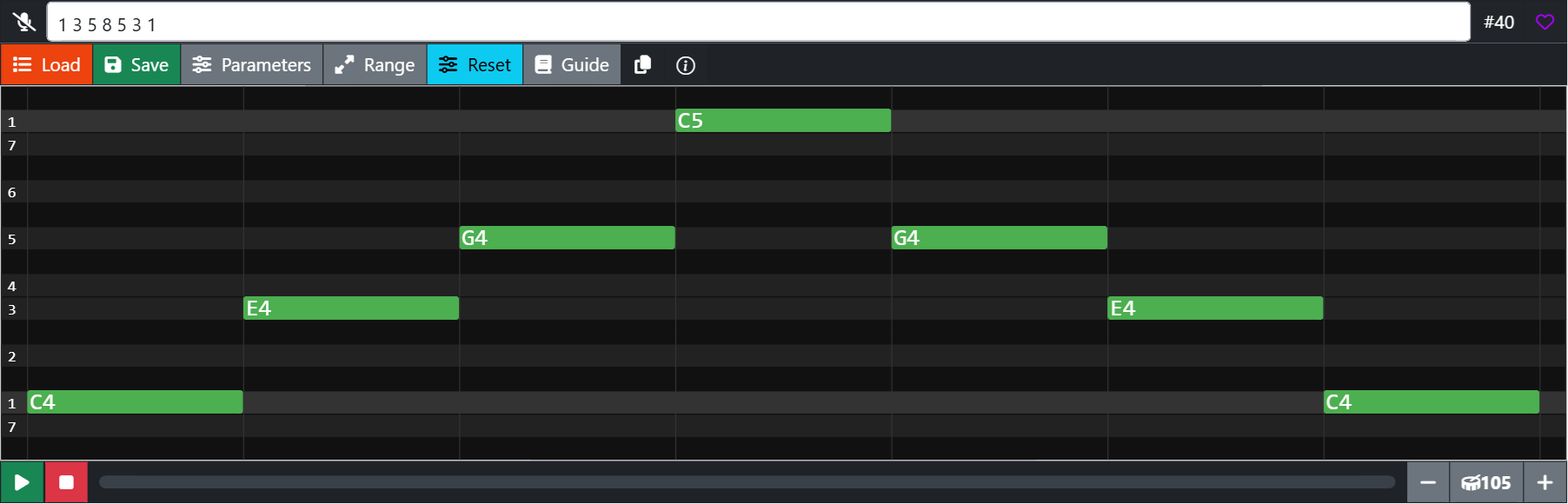
1 3 5 8 5 3 1
Alphabetic Notation
Patterns can also be written using German note notation:
C D E F G A B
Lowercase letters represent the next octave:
c d e f g a b
Example (octave arpeggio):
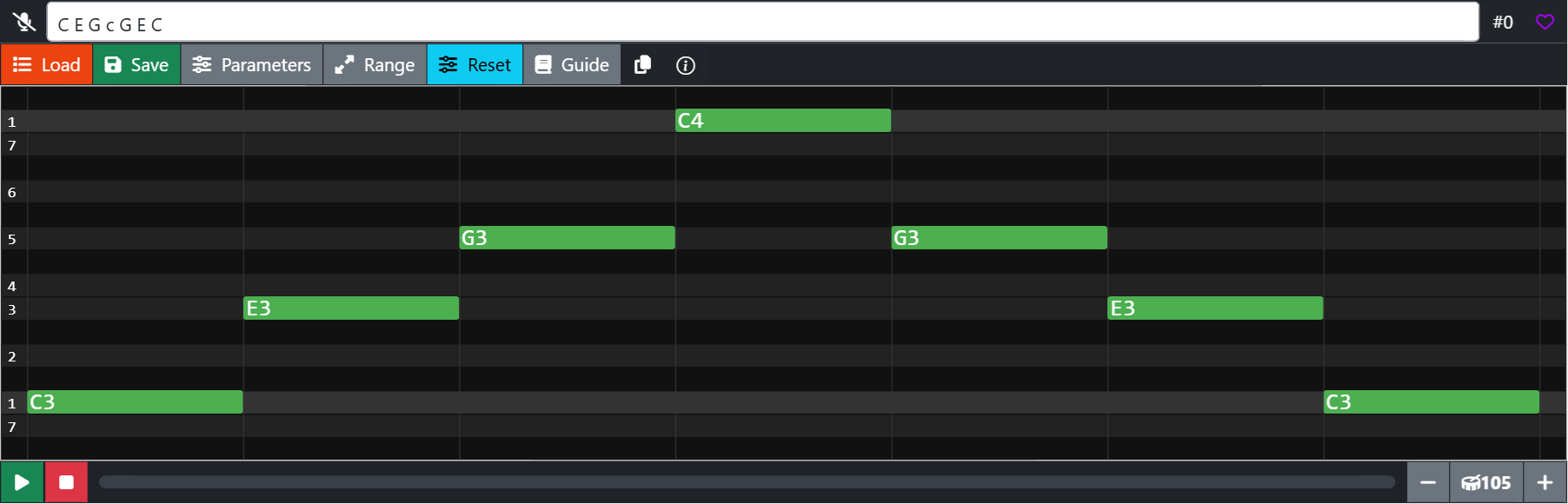
C E G c G E C
Sharp and Flat Modifiers
Sharp (#) and flat (b) modifiers are supported.
Example (blues scale):
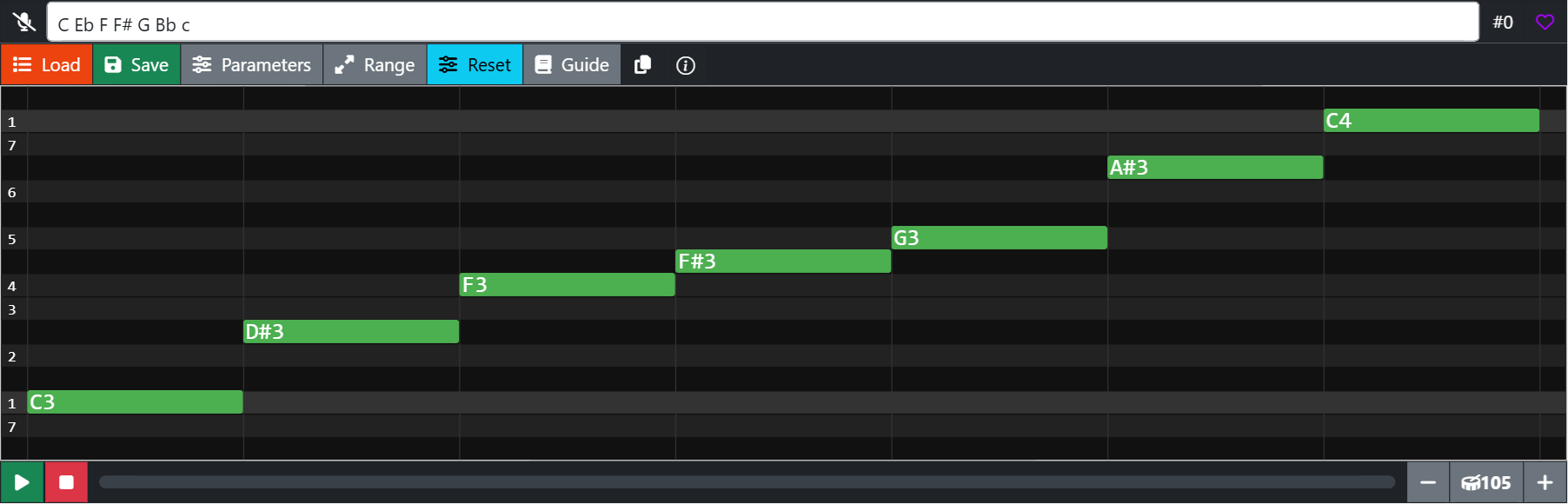
1 3b 4 4# 5 7b 8
or equivalent alphabetical notation:
C Eb F F# G Bb c
Note Length Modifiers - Prolonging
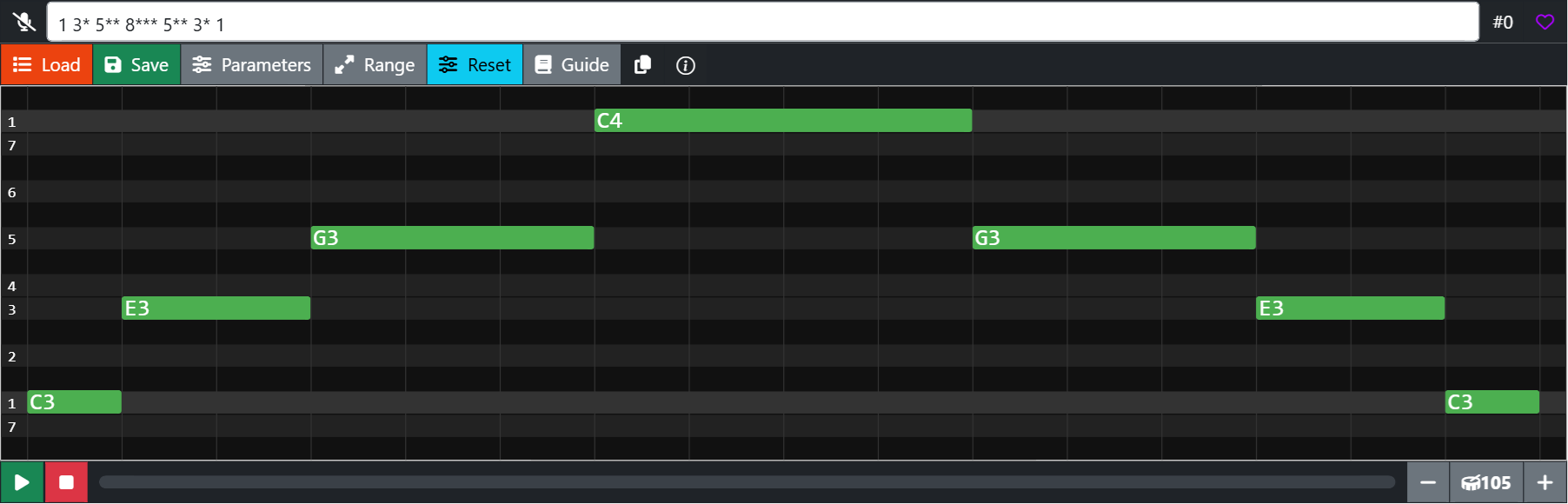
A star (*) placed after a note increases its duration.
Each star adds one additional note length. Therefore, the total note length is multiplied by the number of stars plus one.
*→ twice the note length**→ three times the note length***→ four times the note length
Example:
1 3* 5** 8*** 5** 3* 1
Note Length Modifiers - Shortening
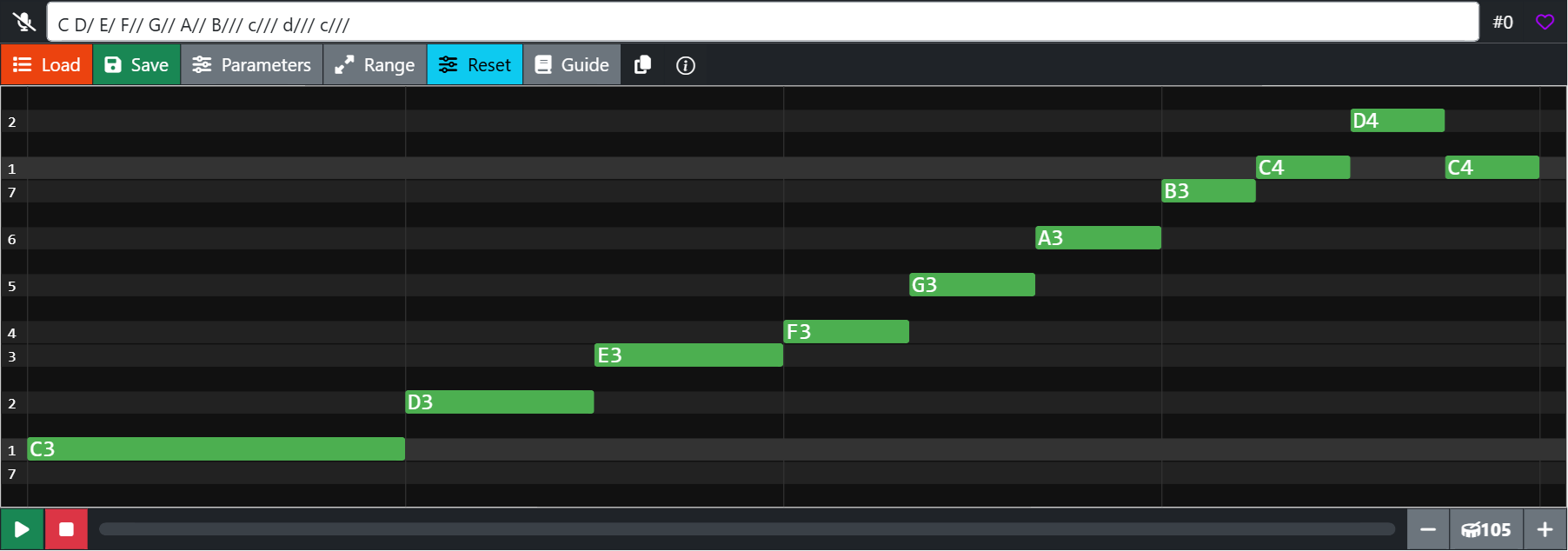
A slash (/) placed after a note shortens its duration.
Each slash increases the number of equal parts into which the note length is divided. Therefore, the note length is divided by the number of slashes plus one.
/→ half of the note length//→ one-third of the note length///→ one-quarter of the note length
Example:
C D/ E/ F// G// A// B/// c/// d/// c///
Note Length Modifiers - Staccato
A dot (.) placed before a note indicates staccato articulation.
Staccato reduces the sounding duration of a note to approximately one third of its note length, creating a short and detached articulation.
Example:
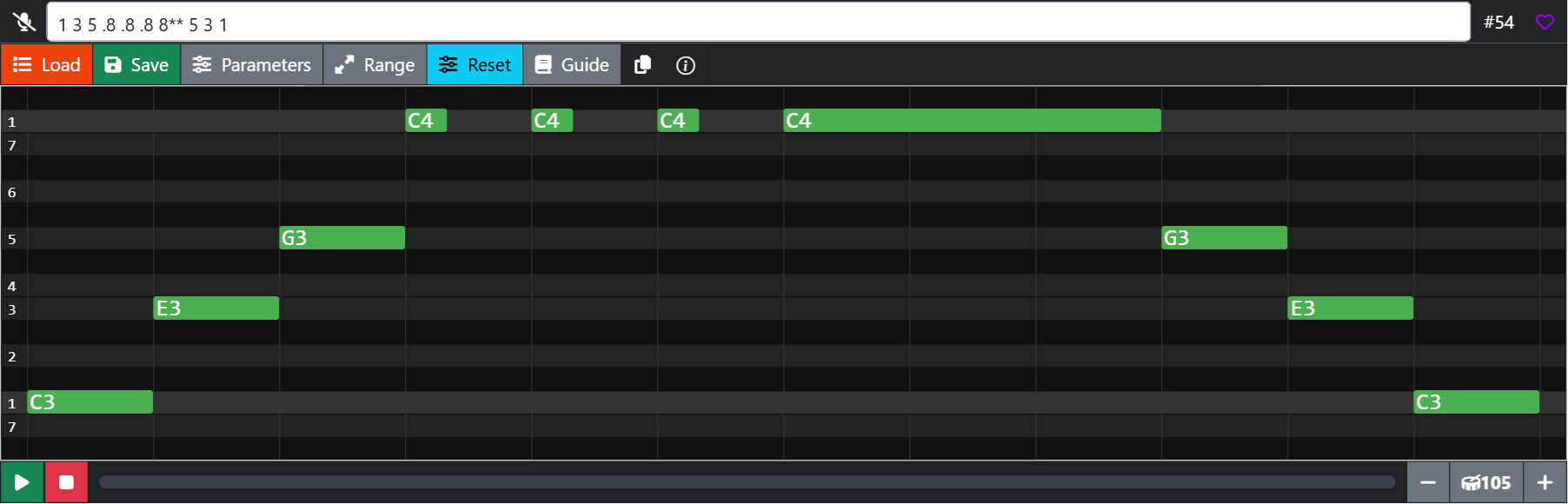
1 3 5 .8 .8 .8 8** 5 3 1